Last Updated on 1 hour ago by Lina Wu
If you have worked on a facade lighting project, you already know that drawings and measurements never tell the whole story.
The dimensions may be accurate and the installation plan may be well prepared. Then you arrive on site and find that a finish has added a few millimetres, a curve is slightly different from the drawing, or two mounting surfaces don’t sit on the same level.
None of this is unusual. It is simply the difference between the facade as planned and the facade as built.
What If the Facade Doesn’t Match the Plan?
Continuous lighting is often manufactured before installation, based on the dimensions available at the time. If the completed path differs slightly from those measurements, the light may not meet the endpoint as expected.
What happens next? The team may need to reconsider the mounting arrangement, modify the run or add another connection. A small difference in length can quickly become additional work on site.
Then there is the facade itself. One continuous run may follow a curve, change direction and cross several panels before reaching its endpoint. Along the way, the mounting surface may rise, fall or shift slightly at a joint.
Each condition is manageable. The real challenge comes when several appear along the same run. Alignment, fixing and connection all need to be resolved together, often with limited access and little room for adjustment.
That is where control matters most. Not on the drawing, but on the actual building in front of you.
What Happens After Handover?
Once the lights are commissioned, the installation may look complete. The building, however, hasn’t stopped moving.
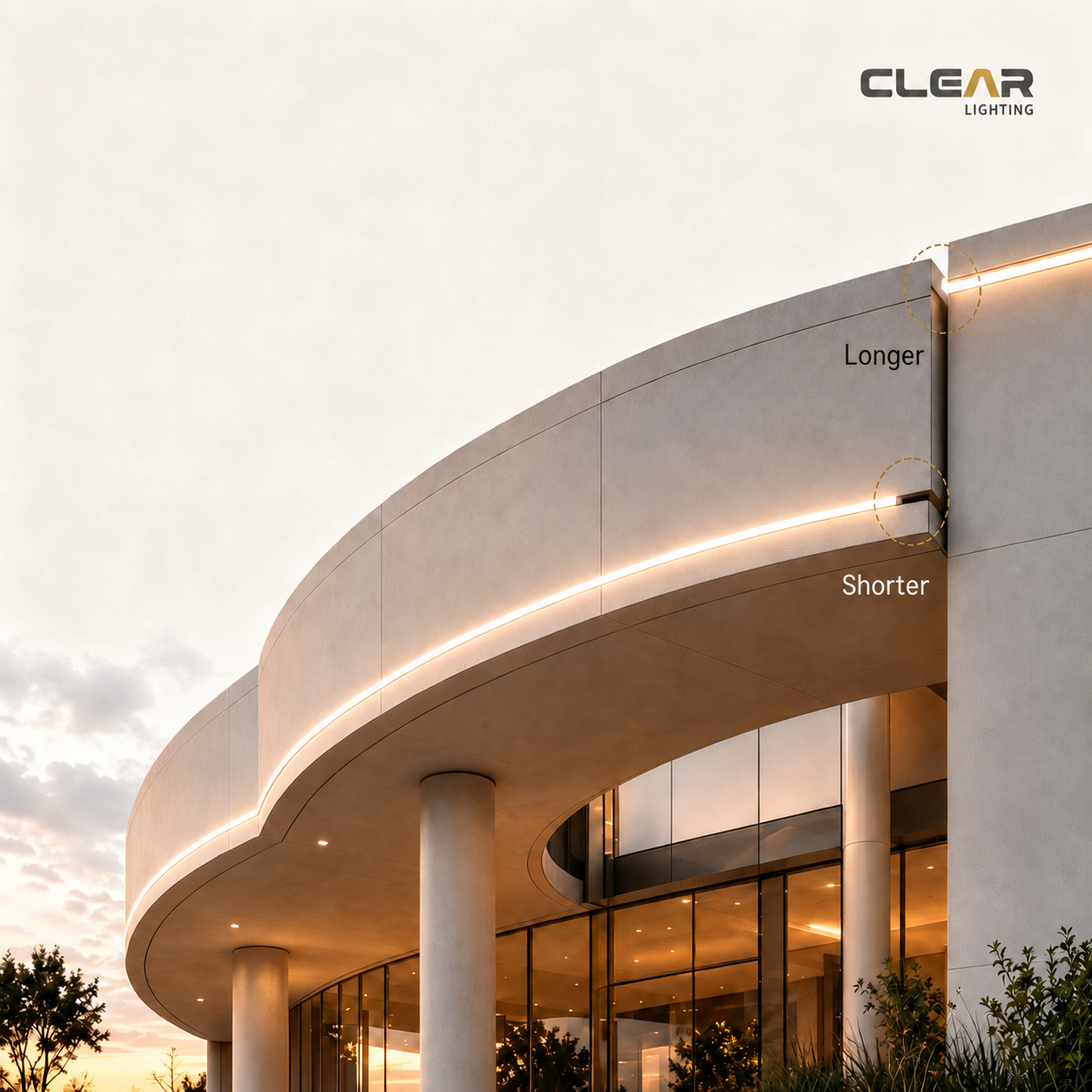
Facades are assembled from separate panels and structural sections, with joints between them. Some joints are simply part of the construction, while others allow sections of the building to move independently.
As temperatures change, materials expand and contract, sometimes at different rates. The movement may be small, but it happens repeatedly. Imagine what years of that movement can mean for a continuous lighting run crossing those joints.
This doesn’t mean every joint will create a problem. It does mean that how the light is routed, fixed and connected can influence what happens long after the team has left the site.
Getting the installation right at handover is important. Giving it room to remain right matters just as much.
One System. More Control.
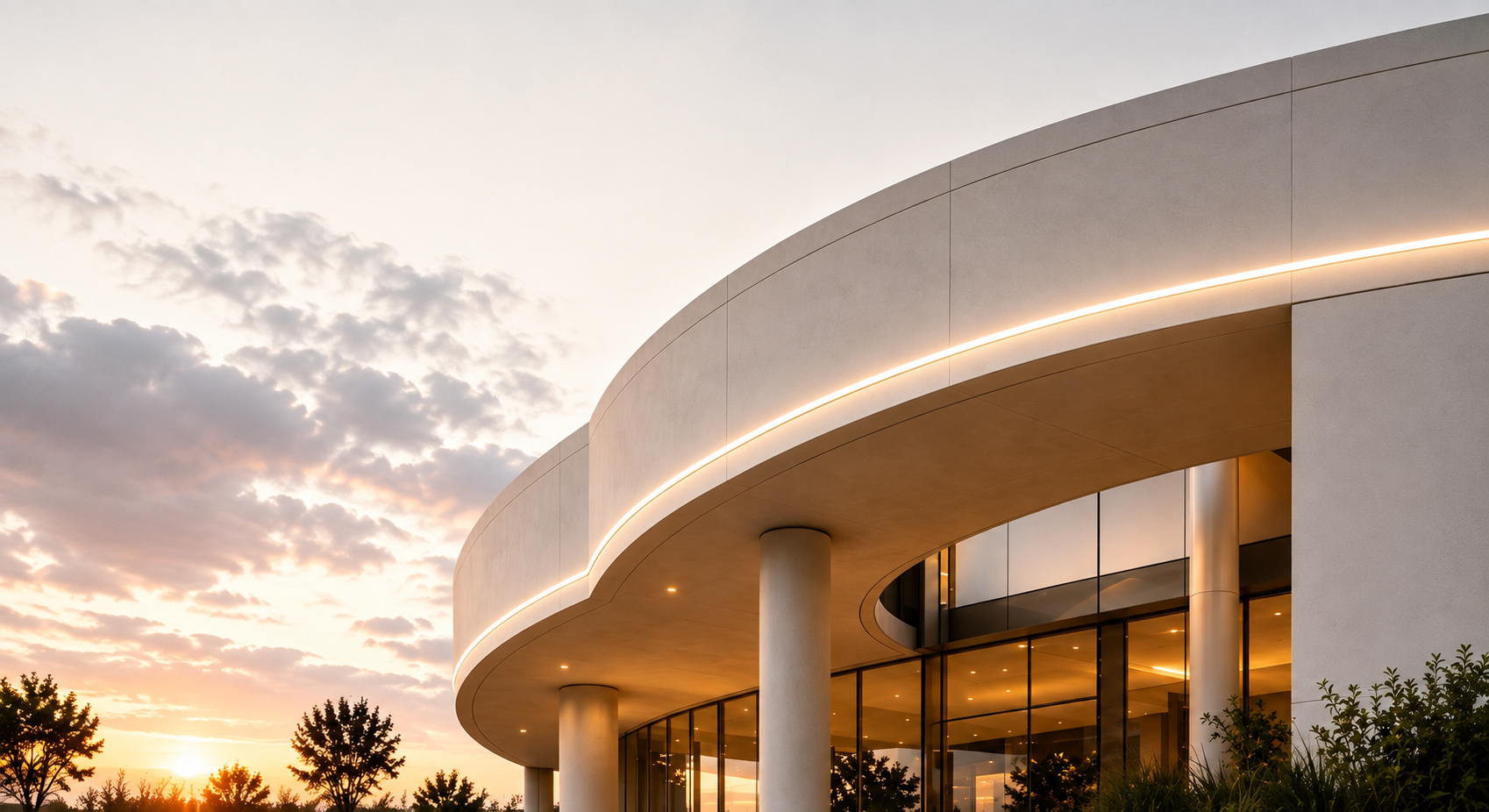
On site, confidence comes from knowing you still have room to adjust when the building doesn’t match the plan exactly.
Built on FreeBend™ technology platform, FacaLite™ brings Arcflex™ neon flex and Anole™ profile together to work with the facade as it is on site, while allowing for the small changes that may develop over time. This gives installation teams greater control during installation and more confidence beyond handover.