Last Updated on 1 month ago by Lina Wu
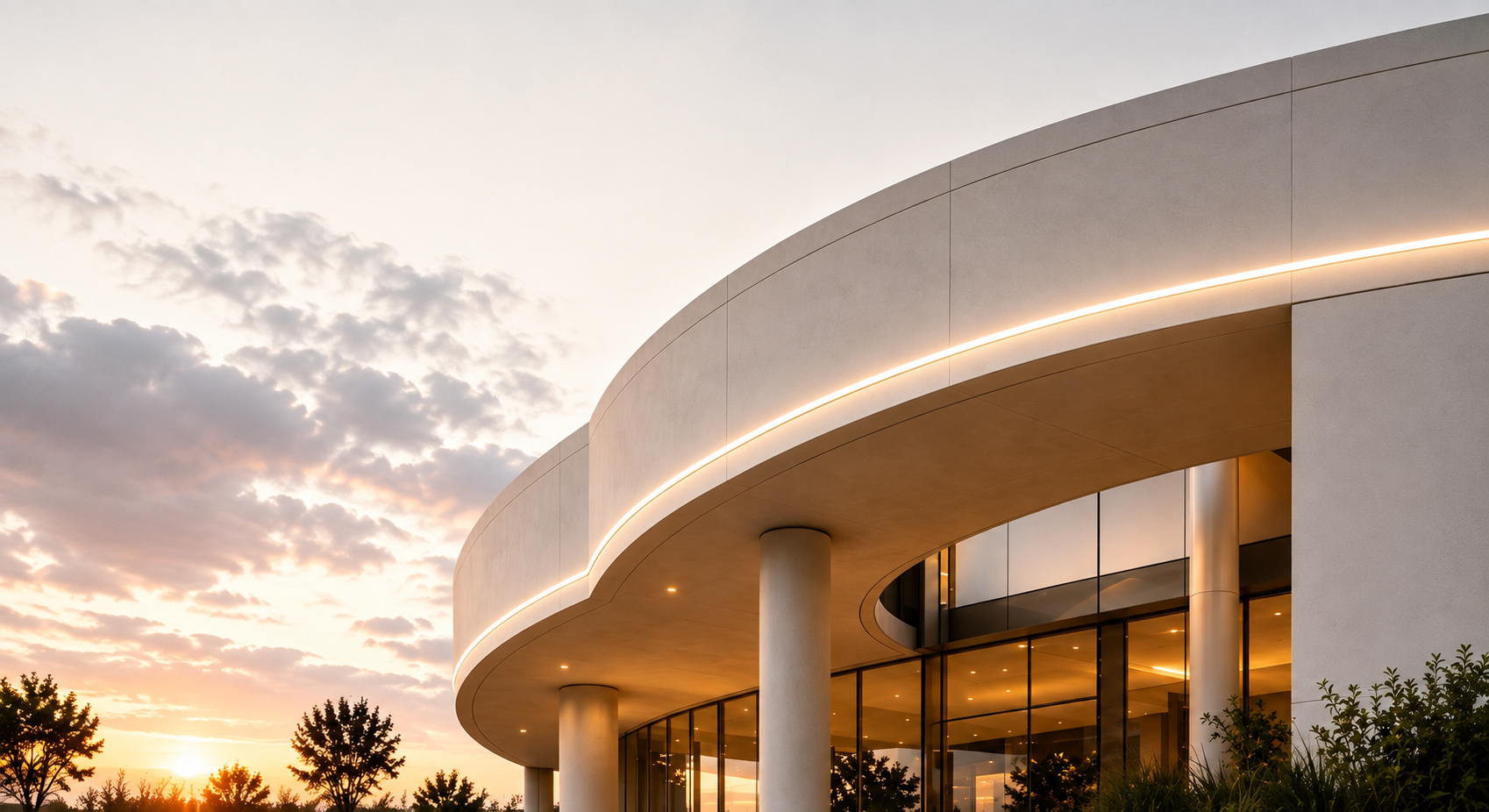
A facade lighting design often begins with a simple idea: a line of light that reveals the architecture after dark.
On the drawing, every line has a clear position and purpose. It follows the building’s proportions, responds to its geometry and strengthens the relationship between light and form. Yet the design is ultimately judged on the completed building, not on the drawing.
The real challenge is carrying that original idea through to the finished facade, then keeping it visually intact through the years that follow.
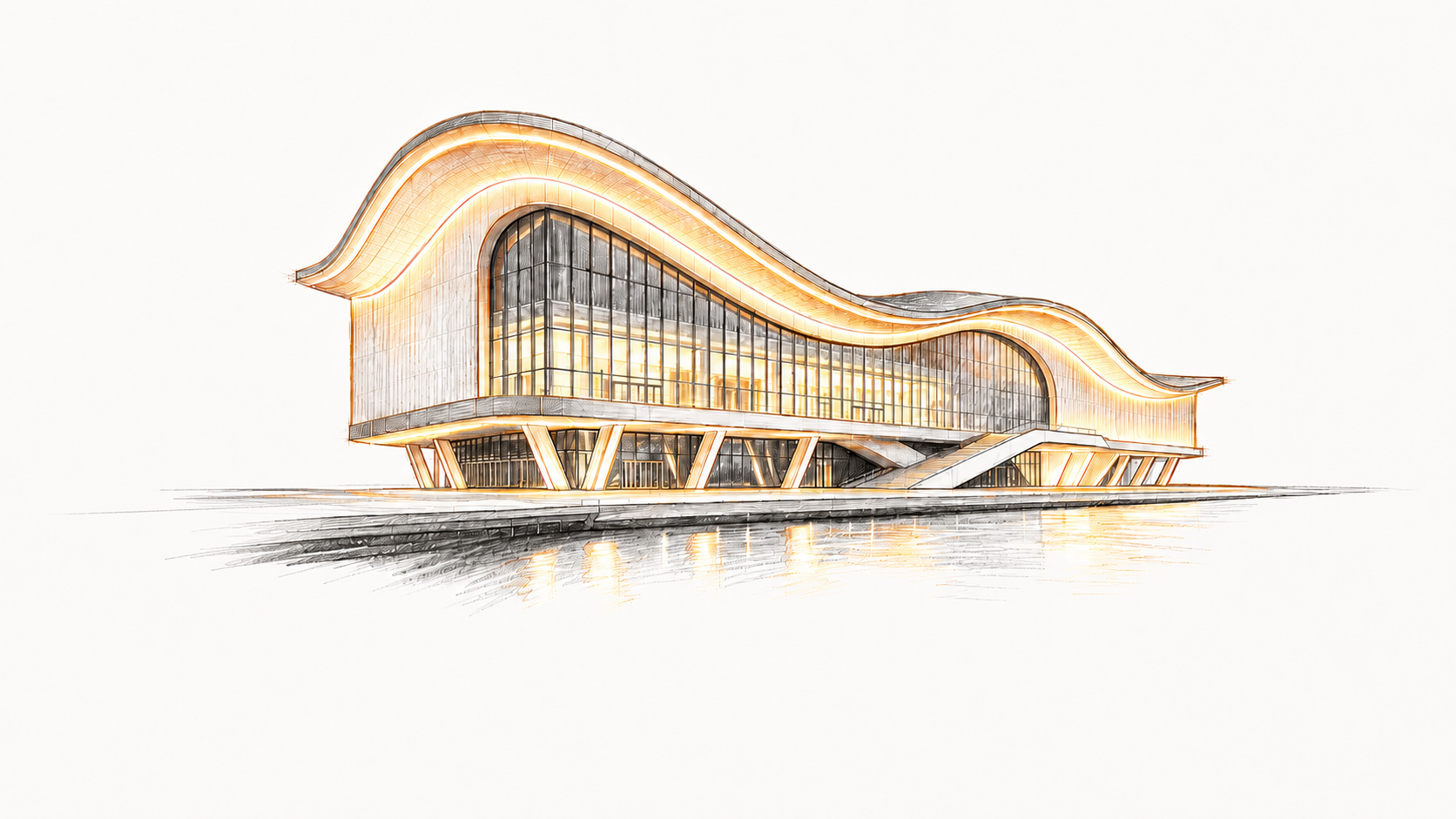
Did Every Line Land as Intended?
The most successful facade lighting feels like part of the architecture itself. It doesn’t compete with the building or appear to have been added afterwards. It clarifies the form and allows the original design language to remain visible at night.
A curved roofline should retain its rhythm. A continuous horizontal line should reinforce the building’s proportions. Corners and transitions should feel resolved, while complex contours should remain clear and intentional.
Designers rarely want viewers to notice how the lighting was installed. They want them to experience the building as a complete composition.
That means the finished facade should preserve what made the design distinctive in the first place:
- The continuity of its lines
- The character of its curves
- The relationship between light and architectural form
- The precision of its transitions and endpoints
- The clarity of the overall nighttime composition
When these elements come together, the light doesn’t merely outline the building. It becomes part of how the architecture is understood.
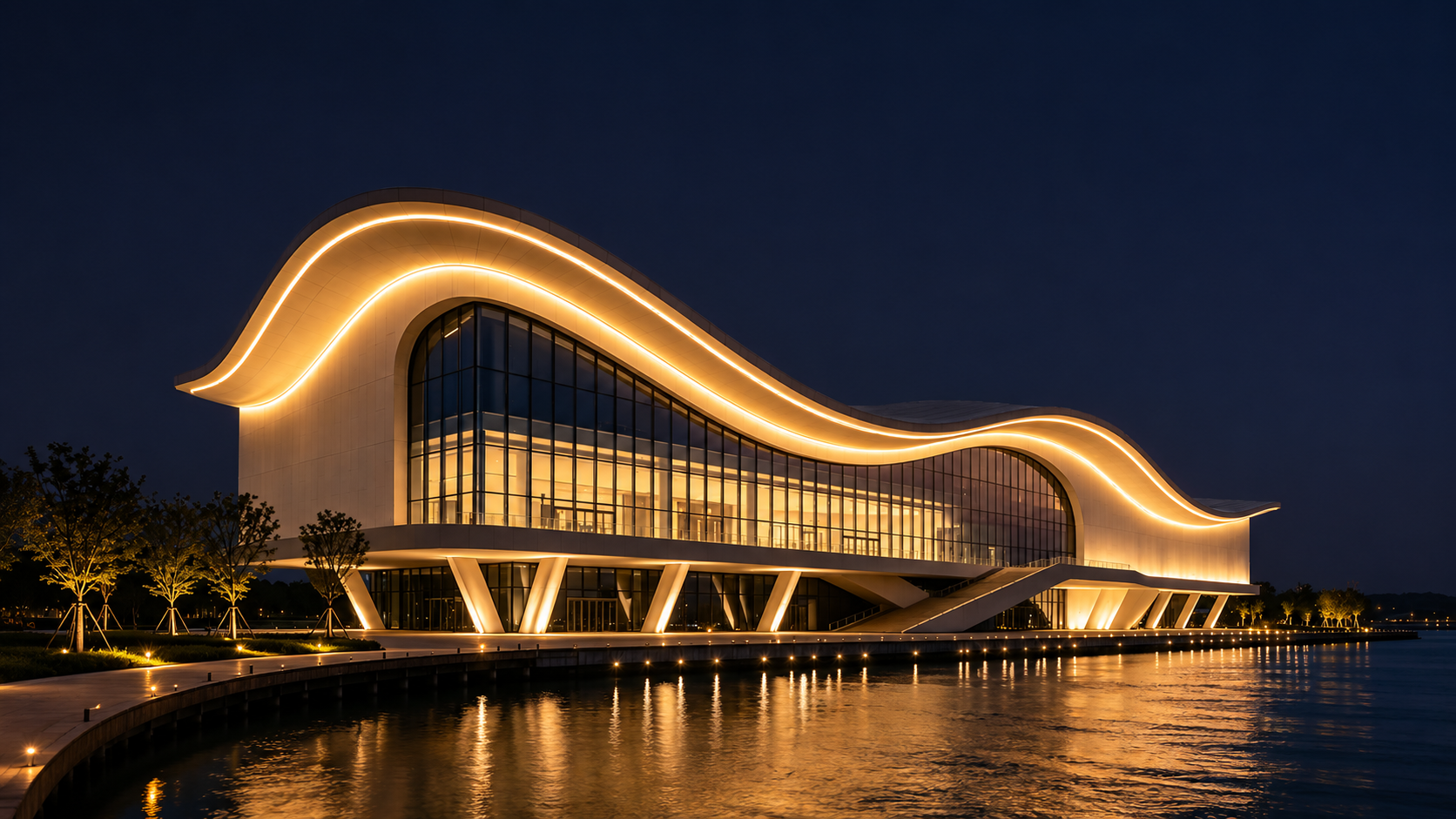
Will It Still Look That Way Years Later?
A facade shouldn’t be judged only on the night it is completed.
After handover, the building continues to respond to its environment. Facade materials expand and contract as temperatures change. Panels and structural elements may shift slightly over time. Wind, weather and repeated movement continue to act on the installation.
These changes are often too small to alter the appearance of the building itself, but a continuous light line can make them visible. If the lighting system cannot respond, the original alignment and continuity may gradually be affected.
This changes the meaning of a successful lighting result. It is no longer only about creating a strong first impression. It is about maintaining the architectural expression beyond completion.
Long-term visual integrity begins with a system that considers movement from the start. The facade may change subtly over time, but the lighting should continue to read as one controlled and intentional part of the architecture.
FacaLite™, Built Around the Design
What separates a good design from a memorable one often lies in the details. The same is true of the lighting that brings it to life. Lighting products may look much the same at first. Time reveals the difference.
Built on FreeBend™ technology platform, FacaLite™ System was developed with these realities in mind, bringing greater care to the details that shape the finished facade and allowing the original design intent to carry through from the first night to the years ahead.
Contact us to learn how FacaLite™ can support your next facade lighting project.